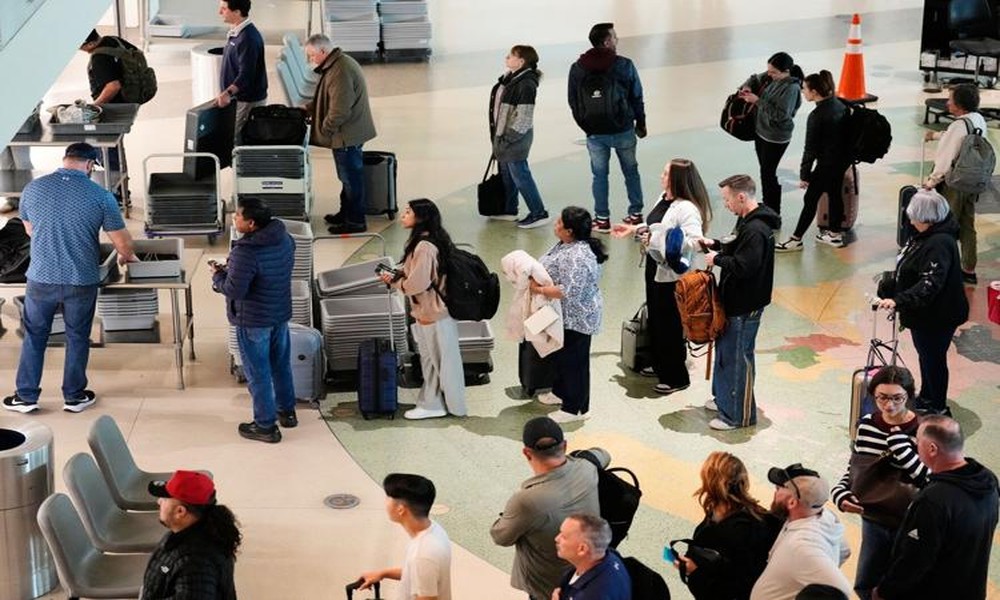

DFW International Airport is one of the busiest in the world, and its Transportation Security Administration workforce is among the largest at any single airport in the country. Transportation Security Officers at DFW – screening passengers and baggage across dozens of checkpoints in five terminals – have federal employment rights. But those rights have historically been more limited than what most other federal civilian employees hold, and the framework governing TSA officer employment is substantially different from the standard Title 5 civil service system that covers the rest of the federal workforce. If you work for TSA at DFW and you’re dealing with a proposed suspension, a removal, a harassment complaint, or a discrimination issue, a Dallas federal employee attorney who understands the specific TSA personnel framework is starting from very different legal terrain than one who handles only standard federal adverse action and EEO cases.
The employment landscape for TSA officers has changed significantly in recent years – but understanding those changes requires knowing what came before, and why the distinctions still matter.
The Historical Framework: Why TSA Was Different From the Start
When the Aviation and Transportation Security Act created the TSA in 2001 in the immediate aftermath of 9/11, Congress gave the Administrator broad authority over the agency’s workforce management. The Administrator was authorized to establish terms and conditions of employment for TSA personnel that differed from Title 5 civil service rules – including different disciplinary procedures, different appeal rights, and different working conditions than applied to other federal agencies.
The practical result was a workforce that, for most of its existence, lacked the MSPB appeal rights that protect most federal employees from arbitrary adverse actions. TSA officers removed from their positions could appeal through a TSA internal appeal process rather than to the independent Merit Systems Protection Board. That internal process was adjudicated within the agency that took the action – not before an independent adjudicative body – and had significantly less formal procedural protection than an MSPB hearing.
Collective bargaining rights were also initially denied to TSA officers. The original TSA authorization permitted the Administrator to prohibit union representation, and TSA did so – meaning that for years, DFW TSA officers had no CBA protections, no union representation in disciplinary proceedings, and no MSPB appeal rights. The combination made TSA officer employment significantly more precarious than comparable positions throughout the federal government.
What Changed in 2023 and What It Actually Provides
In 2023, TSA implemented a new collective bargaining agreement with the American Federation of Government Employees following a significant multi-year effort to extend collective bargaining rights to the TSA workforce. That agreement represented the most significant change in TSA officer employment conditions since the agency was created.
The 2023 CBA established formal disciplinary procedures that require progressive discipline in most circumstances, created a multi-step grievance process for workplace disputes, and provided union representation at formal investigative interviews and disciplinary proceedings. It also established working condition standards around scheduling, leave, and workplace safety that TSA officers had not previously had the contractual right to enforce.
What the CBA did not do is convert TSA officers into Title 5 competitive service employees or provide MSPB appeal rights equivalent to those that govern most federal agencies. TSA officers remain employed under the TSA’s distinct personnel authority. The MSPB’s jurisdiction over TSA screener adverse actions – as distinguished from other TSA employee categories – continues to be more limited than its jurisdiction over standard Title 5 employees. TSA’s internal appeal process exists alongside the CBA grievance and arbitration path.
For DFW TSA officers facing adverse actions after the 2023 CBA’s implementation, the question is which combination of grievance rights under the CBA and whatever internal appeal or judicial review rights apply provides the most complete protection for their specific situation. That analysis requires specific current knowledge of what the CBA actually provides and how it interacts with TSA’s administrative appeal framework.
EEO Rights: What Has Always Applied to TSA Officers
While the collective bargaining history and adverse action appeal rights for TSA officers are complicated, one area of protection has applied from the beginning: federal EEO rights. Title VII, the Rehabilitation Act, the ADEA, and other federal anti-discrimination statutes apply to TSA as a federal agency, and TSA officers – as federal employees – have had EEO complaint rights throughout the agency’s existence.
The 45-day counseling contact deadline applies to TSA officers at DFW the same way it applies to any federal employee facing discrimination or harassment. TSA operates its own EEO program, and the standard federal EEO complaint process runs through TSA’s EEO management system before potentially reaching an EEOC hearing and the federal court system.
In practice, TSA’s EEO complaint landscape at a large, high-volume airport like DFW reflects the demographics of the workforce and the operational environment of airport security screening. Race and national origin discrimination claims have been among the more common EEO complaint categories in TSA’s workforce. Sex harassment claims in the physical environment of a security checkpoint, where officers frequently interact in close proximity, arise with regularity at major airports. Disability accommodation disputes – involving officers who need modified duties because of physical conditions – present specific challenges at an agency where physical screening is a core job function.
The intersection of disability accommodation and TSA’s essential function requirements has generated a specific category of disputes: officers who develop physical limitations that affect their ability to perform checkpoint screening and who request accommodation through modified assignment to lanes, supervisory positions, or administrative roles. Whether such accommodations are reasonable under the Rehabilitation Act depends on what positions are actually available and whether the agency engaged in the required interactive process in good faith – or simply placed the officer on indefinite leave while the accommodation request languished.
Whistleblower Protections at TSA: An Evolving Landscape
TSA officers who report security vulnerabilities, systemic screening failures, or workplace misconduct have whistleblower protection considerations that are somewhat distinct from those at other federal agencies. The Transportation Security Administration’s mandate is security – which means that what constitutes a protected disclosure of “substantial and specific danger to public health or safety” at TSA has different contours than at a regulatory or administrative agency.
An officer who reports to supervisors or to TSA’s headquarters that checkpoint procedures at DFW are being circumvented systemically, that equipment is malfunctioning in ways affecting security efficacy, or that supervisors are pressuring officers to pass inadequate screenings has potentially made a WPA-protected disclosure. The challenge is that TSA’s operational environment involves classified security procedures and specific vulnerabilities that may limit which channels are appropriate for those disclosures. Internal TSA channels, the TSA Whistleblower Protection Program, the DHS OIG, and Congress are potential channels – but their applicability depends on the nature of the disclosure and whether classification considerations affect the appropriate channel.
TSA officers who report workplace safety violations, harassment by supervisors, or retaliatory scheduling and assignment decisions through the grievance process and EEO process retain the same retaliation protections as any other federal employee – but the intersection of those protections with TSA’s security-focused culture, which may characterize whistleblowing as a threat to operational integrity, requires careful navigation.
What a Dallas Federal Employee Attorney Should Know About DFW TSA Cases
The combination of TSA’s distinct personnel authority, the post-2023 CBA framework, the EEO rights that have always applied, and the whistleblower considerations specific to a security agency makes DFW TSA employment disputes a specialized area within an already specialized field. An attorney who has handled only standard Title 5 adverse action cases or private sector employment discrimination cases will be working from an incomplete map.
The Mundaca Law Firm represents federal employees in Dallas and throughout the Northern District of Texas, including TSA officers at DFW Airport facing adverse actions, harassment, discrimination, and retaliation situations. If you work for TSA at DFW and are navigating a disciplinary proceeding, an EEO complaint, or a whistleblower concern, contact the firm to schedule a consultation and understand specifically which protections apply to your situation as it exists today – not as it existed before 2023.